Showing posts with label Faculty. Show all posts

Wednesday, November 04, 2020

UIS announces Spring 2021 schedule update due to COVID-19


The following update to the University of Illinois Springfield Spring Semester 2021 schedule, in response to the COVID-19 pandemic, was emailed to the UIS community on Nov. 4, 2020.

UIS Community: 

On Friday, Chancellor Whitney approved recommendations for the Spring 2021 semester from the Campus Senate Executive Committee. These recommendations include: 
  • Conducting all classes remotely during the first two weeks of the semester (January 19-29). 
  • Adapting the five days of Spring Recess to distribute them across multiple weeks of the semester, resulting in the following five non-instructional days:
    • Tuesday, March 2 and Wednesday, March 3
    • Monday, April 26
    • Thursday, May 6 and Friday, May 7 (Reading Days) 
Non-instructional days are defined as days when no classes are held either in person or remotely, and no examinations or assignments of any kind (papers, projects, quizzes, etc.) are due. This includes the two Reading Days at the end of the semester, meaning that final projects, papers or exams cannot be due on Reading Days. 

These recommendations seek to prioritize the health and safety of the campus and surrounding communities to the greatest extent possible, by limiting opportunities for off-campus travel while providing non-instructional days that correspond with peak periods of student demands for counseling and stress release. 

Thank you to the many individuals who contributed to the extensive conversations surrounding the Spring 2021 semester. 

Dennis Dennis R. Papini 
Vice Chancellor for Academic Affairs and Provost 
University of Illinois at Springfield

Thursday, June 18, 2020

UIS plans for safe return of students in fall 2020


The following message was sent by the University of Illinois System to students, faculty and staff on June 18, 2020.

Dear students, faculty and staff:

We are very pleased to announce that on-campus educational activities will resume this fall at the University of Illinois System’s three universities, with a hybrid mixture of in-person and online classes. Of course, our collective decision assumes that Illinois stays on track to meet Phase 4 requirements established by Gov. J.B. Pritzker’s Restore Illinois plan that allow reopening of classrooms.

Plans to restore in-person instruction were developed through weeks of exhaustive review that brought together literally hundreds of key stakeholders and considered every available option, from a full return to traditional instruction to remaining fully online.

Throughout, this work was guided by two, intertwined core principles – promoting the safety of our campus communities while maintaining the academic excellence that is synonymous with our best-in-class universities in Urbana-Champaign, Chicago and Springfield. In the process, faculty, staff, administrative leaders and students drew upon the insights of our own healthcare and education experts, as well as best practices of peer institutions and guidance from state and local health departments, the Centers for Disease Control and Prevention and the Illinois Board of Higher Education.

The result is a thoughtful, science-based approach that will bring our universities back to life, with a campus experience that will look somewhat different. But the life-changing benefits will be the same – academic programs that lift students to the careers of their dreams, research that drives discovery and progress, and a healthcare enterprise that provides both patient care and innovation.

A system-wide coordination committee assisted groups at each of the three universities that have worked over the past few weeks to develop detailed plans for reopening. Each university will be providing details of their unique, campus-based plans within the next few weeks, including starting dates and calendars for their fall semesters. But here is a summary of elements that will be common to all:

Instruction 
  • Classes will be a mixture of in-person and remote instruction to provide the physical distancing that inhibits spread of the virus.
  • In-person courses and classroom schedules will be adjusted appropriately to ensure physical distancing and safer traffic flow.
  • Accommodations will be made where possible for students and faculty in vulnerable and at-risk groups, and for students who cannot come to campus due to travel restrictions or other considerations.
  • Classrooms will be cleaned and disinfected daily.
  • Reusable, washable masks will be provided to all students and required in all classrooms, and hand sanitizer will be widely available in all buildings.
  • Training for faculty and instructors is being provided over the summer to sustain high-quality online and distance instruction with state-of-the-art technologies and virtual modalities.
University housing/dining
  • Residence hall occupancy will be limited to two students per room.
  • Outside visitors will not be allowed in residence halls.
  • Quarantine areas will be created to accommodate students who test positive for COVID-19 or display symptoms.
  • Dining halls will largely provide packaged meals for carryout, and in-person dining will be limited.
  • Common areas will be cleaned and disinfected regularly, and hand sanitizer will be available.
  • Use of these common areas will be limited, and physical distancing will be observed. 
Campus life
  • The size of gatherings will be based on standards under the state reopening guidelines in force this fall and beyond.
  • Use of auxiliary facilities such as recreational centers will be limited to preserve safety. 
  • Outside visitors to campus will be asked to follow physical distancing and wear masks in public places. 
Research
  • Research activities will continue a ramp-up that began over the summer.
  • As in classrooms, masks will be required and other safety measures will be followed.
  • Research will continue to support treatments, vaccines and other measures related to COVID-19. 
Employees
  • Most faculty and staff will continue a phased-in return to work that began in June and will be completed by the start of the fall semester, though some will continue to work from home to reduce campus density.
  • Flexible work-from-home guidelines will be developed for the benefit of vulnerable employees and those with family-related considerations.
  • Work areas will be cleaned regularly, and hand sanitizer will be provided.
  • Masks will be required in publicly shared spaces and reusable masks will be provided to all employees.
  • We will continue engagement with our labor unions to discuss the impact of these plans.
Testing and notification
  • Our scientists are piloting cutting-edge testing procedures for the COVID-19 virus that are accurate, cost-effective and scalable to the whole university community and provide same-day results.
  • We are partnering closely with local public health authorities to notify individuals at risk for infection and mitigate spread, through a combination of manual and rapid app-based approaches.
  • All app-based software will protect individual privacy so that positive test results are shared only with the user, and no location data will be required, collected or shared with third parties. Local public health departments will be provided test results based on required local, state and federal regulations. 
General safety
  • Training will be required for all students and employees to ensure compliance with physical distancing and other COVID-related safety measures.
  • Hand sanitizer or disposable wipes will be available at building entrances, elevator lobbies and in common and high-traffic areas.
  • High-touch surfaces such as door handles and elevator buttons will be disinfected multiple times daily.
  • Flu shots will be strongly encouraged for all students, faculty and staff to lessen the possibility of dual outbreaks when traditional flu season begins. 
The pandemic is still evolving, so our plans will be flexible and nimble. We will monitor campus safety and the latest guidance on the virus, and will adjust plans as needed to protect the well-being of our students, faculty, staff and the communities we call home.

Our plans for fall could not have been developed without you, and we are deeply grateful to everyone who shared their time and talents to guide us. And we know that you will now help lead the way again, modeling the safety protocols that are essential to make our plans a success.

The COVID-19 pandemic has been a test unlike any in our 150-year history. But thanks to your commitment and creativity, we have done more than just answer challenges to our operations. You are supporting the leading-edge medical treatments and scholarship that are helping the state manage the crisis and move beyond it. You are helping show the life-changing power of our universities – in real-time – that will write new chapters in our long legacy of excellence.

Be safe, enjoy your summer and we look forward to seeing you in the fall.

Sincerely, Tim Killeen, President, University of Illinois System
Barb Wilson, Executive Vice President and Vice President for Academic Affairs, U of I System Robert J. Jones, Chancellor, University of Illinois at Urbana-Champaign
Michael D. Amiridis, Chancellor, University of Illinois at Chicago
Susan J. Koch, Chancellor, University of Illinois at Springfield
Karen M. Whitney, Interim Chancellor, University of Illinois at Springfield

Wednesday, June 10, 2020

UIS and the Illinois Municipal League partner to publish the Illinois Municipal Policy Journal

The Illinois Municipal League (IML) announced a partnership with the University of Illinois Springfield (UIS) to publish the Illinois Municipal Policy Journal.

Since 2016, IML has published the Journal as an educational tool that provides elected officials with academic research on the issues facing Illinois and its 1,298 cities, villages and towns. Additionally, it provides an arena for academics to publish their scholarly work on important topics, like public pensions, tax increment financing and other local government issues.

“This new partnership allows IML to continue expanding its benefits to our members by addressing some of the greatest challenges facing our state and providing solutions, which are needed now more than ever before as communities face decreased revenues that fund crucial programs,” said Brad Cole, IML executive director. “We are happy to join with the University of Illinois Springfield and look forward to the continued success of the Illinois Municipal Policy Journal.”

“A hallmark of this partnership is the blending of theory and practice made possible by balancing the talents and experiences of public officials delivering frontline municipal services with the input and observations of scholars who study and observe the role of municipal government in the state,” said Robert W. Smith, dean of the UIS College of Public Affairs and Administration. “This is something needed today more than ever to solve problems and improve municipal government and systems for all citizens in the State of Illinois.”

UIS’s College of Public Affairs and Administration will spearhead the development of content for the Journal. IML will publish and distribute the Journal widely to local and state elected officials, as well as academic and professional organizations around the country.

Three principal UIS faculty members will be involved in editing the Journal. Kenneth Kriz, UIS Distinguished Professor of Public Administration and Director of the Institute for Illinois Public Finance; Beverly Bunch, UIS Professor of Public Administration; and Arwi Kriz, a visiting Research Fellow in the UIS Center for State Policy and Leadership.

“We are very excited about providing government officials throughout the state with the most current research on issues that affect the state and its local governments. When challenges to governance are more severe then they have ever been, the state university system is befitting to shed light on best practices in governance, forces that affect governments and choices that governments face,” said Kenneth Kriz.

“We will be working with scholars across the state to synthesize and share research on various economic, financial, social, legal and environmental issues. We will address topics such as the potential impacts of different alternatives, the types of factors that are important to consider, and what has worked, or not worked, in other governments. We are pleased to be collaborating with IML on this project,” said Bunch.

The fifth volume of the Illinois Municipal Policy Journal is scheduled to be available in December 2020.

Wednesday, January 15, 2020

UIS Institute for Illinois Public Finance releases report on state government efficiency

A study released today by the University of Illinois Springfield’s Institute for Illinois Public Finance reports mixed results with respect to the efficiency of Illinois state government when compared to other states.

The study finds that Illinois state government is in a group of the most efficient states in three areas: higher education, environment and housing, and infrastructure. It is in the top 20 states for efficiency in welfare, and in the top half of states for public safety and health and hospitals efficiency.

However, the state ranks below average in efficiency in elementary and secondary education and near the bottom in transportation.

“The study is unique in that the measures of efficiency that are produced lead directly to recommendations for improving the efficiency of state government operations,” said Arwi Srithongrung Kriz, a UIS Institute for Illinois Public Finance research fellow who authored the study.

Recommendations in the study include increasing regional or centralized services shared by local school districts for the elementary and secondary education function and reducing capital project acquisition costs when it comes to transportation.

Srithongrung Kriz, an internationally recognized expert on efficiency measurement who holds a doctorate in public administration, developed measures of efficiency for eight functions of state government: higher education, elementary and secondary education, public welfare, health and hospitals, transportation, public safety, environment and housing and infrastructure.

She compares numerous measures of the things that government produces, such as the number of degrees awarded at public universities and the number of prisoners in correctional facilities with the costs of those services and the number of state employees in each function.

Srithongrung Kriz employed a methodology, which she says has been scientifically tested in many settings and is superior to measures used in previous analyses of state government efficiency.

The study is available in a longer working paper format that compares efficiency across all states and a shorter white paper version that focuses on Illinois state government.

For more information, contact Arwi Srithongrung Kriz at 217-206-8047 or asrit1@uis.edu.

Tuesday, September 17, 2019

UIS Public Administration Department earns public procurement accreditation from national organization

Photo Courtesy: @ArkansasNIGP
The University of Illinois Springfield’s Public Administration Department has received accreditation in public procurement from NIGP: The Institute for Public Procurement. UIS is the first recipient of the National Institute of Governmental Purchasing’s (NIGP) academic accreditation - earning two certificates.

UIS College of Public Affairs and Administration Dean Robert Smith and Adam Williams, Ph.D., director of the UIS Master of Public Administration (MPA) Program, were presented the certificate of accreditation at the NIGP forum held in Austin, Texas on Aug. 25.

According to NIGP, the certificate of accreditation reinforces the credibility of UIS’ Public Administration Department, an accomplishment that is highly regarded by the institution's administrators, faculty, alumni and students.

“The certificate and the achievement is a testament to the academic institution's high caliber of educational content, execution, and real-world experience,” said NIGP in a press release. “The UIS program is built on key strategic procurement competencies with demonstrated resources and effective course planning, design and instruction.”

According to Rick Grimm, NIGP CEO, "The University of Illinois Springfield's Department of Public Administration represents an elite and innovative higher education academic institution. It's an honor and privilege to have UIS earn NIGP's inaugural accreditation.”

“We look forward to the ability to work closely with the NIGP and its various chapters to provide quality educational opportunities and assist in the training of the coming generations of procurement professionals,” said Williams. “It is our hope that the membership will work closely with UIS in the continuous development of the content for these students and create a pipeline for the profession for years to come.”

NIGP's higher education accreditation distinguishes those academic institutions that offer dedicated procurement certificates or procurement concentration programs in public administration which meet or exceed rigorous standards and best of class practices.

Wednesday, August 21, 2019

University of Illinois Springfield announces 24 new faculty appointments for Fall Semester 2019

The University of Illinois Springfield has announced 24 new faculty appointments for Fall Semester 2019. Fourteen faculty members will teach in the College of Liberal Arts and Sciences, two in the College of Business and Management, two in the College of Education and Human Services, five in the College of Public Affairs and Administration and one the Capital Scholars Honors Program.

Miranda Andrews, chemistry instructor in the College of Liberal Arts and Sciences, holds a bachelor’s degree in biochemistry from the University of Louisiana at Monroe. Her research interests include chemistry education, organic and inorganic chemistry, and photochemistry. Outside of work, she enjoys video and board games, hiking and camping and trying/making new foods.

Corey Burns, chemistry instructor in the College of Liberal Arts and Sciences, holds a doctorate in chemistry from Texas A&M University. His research interests include chemistry, inorganic chemistry, chemical education and teaching method development. His personal interests include tabletop games, baseball and bad movies.

Kerry Cox, clinical assistant professor of educational leadership in the College of Education and Human Services, holds a doctorate in education from Illinois State University. Her research interests include gifted education, school leadership and PH‐12 Educational Policy. Outside of work, she enjoys fitness and exercise, gardening and fishing.

Diana Dabek, honors instructor and coordinator of honors composition & student support for the Capital Scholars Honors Program, earned a doctorate in English from the University of Miami. Her research interests include early American literature and culture, rhetoric and composition studies and writing across the curriculum. Outside of work, she enjoys reading, running, traveling and hunting for antiques.

Ty Dooley, assistant professor of public administration in the College of Public Affairs and Administration, earned a doctorate in public policy–community development from the University of Arkansas. His research interests include social justice, human capital development, program implementation and education. His personal interests include hiking, chess, family, dining and general camaraderie.

Scott Faingold, communication instructor and director of student media in the College of Liberal Arts and Sciences, earned a master’s degree in communication from the University of Illinois Springfield.

Scott Fenton, English and modern languages instructor in the College of Liberal Arts and Sciences, earned a master’s degree in creative writing (fiction) from Indiana University. His professional interests include contemporary short fiction, LGBTQ+ studies and first‐year writing pedagogy. His personal interests include reality TV and drag.

Roya Gholami, associate professor of management information systems in the College of Business and Management, holds a doctorate in management information systems from the National University of Singapore. Her research interests include IT value (economic, environmental, societal), IT for development and healthcare information systems. Outside of work, she enjoys hiking, reading, singing Persian folk songs and international relations.

Amanda Hughett, assistant professor of legal studies in the College of Public Affairs and Administration, earned a doctorate in U.S. history from Duke University. Her research interests include law, social movements, and criminal justice policy in the United States. Outside of work, she enjoys reading and writing, cooking, travel and jogging.

Jordan Hyde, assistant professor of psychology in the College of Liberal Arts and Sciences, holds a doctorate in applied social psychology from Brigham Young University. His research interests include cultural psychology, race and cultural diversity and intergroup relations, diversity and philosophy of science. He is the husband to Victoria, daddy to Anthem and Eliza, and enjoys TV/movies, piano and singing.

Sunshin Lee, assistant professor of computer science in the College of Liberal Arts and Sciences, earned a doctorate in computer science from Virginia Tech. His research interests include big data analytics and machine learning. Outside of work, he enjoys fishing.

Yifei Li, assistant professor of mathematical sciences in the College of Liberal Arts and Sciences, earned a doctorate in mathematics from Washington University in St. Louis. Her research interests include mathematics, discrete mathematics, algebraic combinatorics, Poset Topology and related Representation Theory. Her personal interests include drawing, painting, reading novels and “watching my kid play.”

Joshua Lively, assistant professor of environmental studies in the College of Public Affairs and Administration, holds a master’s degree in geology from the University of Utah. His research interests include the evolutionary patterns of organisms (especially marine reptiles and freshwater turtles) during periods of globally warm climate in deep time. Outside of work, he enjoys hiking, bird watching, fishing, watching college football and tennis.

Christie Magoulias, associate professor of educational leadership in the College of Education and Human Services, holds a doctorate in educational administration from Southern Illinois University at Carbondale. Her research interests include leader influence on school culture, trauma‐informed care, Resiliency Theory, children’s experiences represented in literature, the teacher shortage and recruitment of male teachers. Outside of work, she is the “acting director of operations” for a family of five, raising sons and animals, while traveling and exploring.

Frank Marsaglia, visiting instructor of computer science in the College of Liberal Arts and Sciences, holds a master’s degree in computer science from the University of Illinois Springfield. His professional interests include computer networking and security. His personal interest include golf.

Amirreza Niakanlahiji, assistant professor of computer science and information systems security in the College of Liberal Arts and Sciences, earned a doctorate in software and information systems from the University of North Carolina–Charlotte. His professional interests include cybersecurity, cyber deception, cyber threat analytics and network security. Outside of work, he enjoys hiking and cooking.

Sevilay Onal, assistant professor of management information systems in the College of Business and Management, holds a doctorate in industrial engineering from the New Jersey Institute of Technology. Her research interests include operations and supply chain management. Her personal interests include fossil hunting.

Graham Peck, distinguished professor of history in the College of Liberal Arts and Sciences, earned a doctorate in history from Northwestern University. His research interests include Abraham Lincoln, antebellum Illinois, antislavery politics and the origins of the Civil War. Outside of work, he enjoys reading, walking, swimming and talking with friends.

Jason Piscia, assistant professor of public affairs reporting in the College of Public Affairs and Administration, earned a master’s degree in public affairs reporting from the University of Illinois Springfield in 1998. Piscia previously worked in The State Journal-Register newsroom for 21 years, serving most recently as digital managing editor. He has two children, ages 9 and 5, with his wife Joni and enjoys traveling and watching movies.

Roberto Rincon, political science lecturer in the College of Public Affairs and Administration, is expected to earn a doctorate in political science from the University of Illinois at Chicago this year. His research interests include issues of race and social justice with a focus on the politics of recognition as it regards Afro‐Mexican communities in Mexico and the U.S. His personal interests include travel, music, fiction – an extension of a commitment to diversity, experiential learning and thinking the common.

Livia Woods, assistant professor of English and modern languages in the College of Liberal Arts and Sciences, earned a doctorate in English from the City University of New York. Her research interests include Victorian literature and culture, women’s and gender studies, pedagogy and composition. Her personal interests include yoga, running, cooking, puppies and babies.

Yingyuan Yang, assistant professor of computer science in the College of Liberal Arts and Sciences, holds doctorate in computer science from the University of Tennessee. His research interests include cyber‐security and machine learning. Outside of work, he enjoys playing the piano.

Jae Yom, assistant professor of allied health/exercise science in the College of Liberal Arts and Sciences, earned a doctorate in exercise science from the University of Georgia. His research interests include biomechanics, knee injury and sport medicine. His personal interests include skiing and hockey.

Diana Zaleski, psychology instructor in the College of Liberal Arts and Sciences, earned a doctorate in educational psychology from Northern Illinois University. Her research interests include educational psychology, educational policy, educational measurement, assessment and evaluation. Outside of work, she enjoys volunteering in the community.

Thursday, March 07, 2019

UIS study finds “bedazzled” recycling bins don’t increase recycling behavior on campus

UIS students Caleb Froidcoeur and Marissa Jones stand next to a "bedazzled" recycling container used in the study.
A recent study conducted by students and faculty at the University of Illinois Springfield has found that “bedazzled” or more aesthetically pleasing recycling bins did not increase recycling behavior on the Springfield campus.

The waste management study, funded by a $3,654 PepsiCo Recycling grant, was conducted from October 1 to November 16, 2018. The researchers randomly deployed both “bedazzled” recycling bins featuring colorful nature photos with phrases, such as “thanks for pitching in,” on them and traditional blue recycling bins in main campus buildings to test their hypothesis.

“The idea for the study was built on research that found nature scenes in product marketing create a positive emotional response for consumers who are less concerned about environmental issues,” said Carolee Rigsbee, UIS assistant professor of management. “We thought positive emotions from viewing nature scenes would also increase recycling behavior, but we did not find this outcome using the bedazzled containers on the UIS campus.”

The 20 “bedazzled” recycling bins and 20 standard blue recycling bins purchased by the PepsiCo Recycling grant will still be put to good use on campus. The UIS Department of Residence Life will be deploying the recycling containers in residence halls and near townhouses/apartments to increase recycling convenience.

“Education will be a big part of this effort to increase recycling on campus,” said Marissa Jones, a UIS environmental studies major who helped conduct the study. “We’ll be working with RAs and the Residence Life leadership team during upcoming training sessions. The idea will be for them to spread the word to students and become champions for campus recycling.”

Rigsbee points out that the collaboration between students and faculty was an important part of the research study. UIS faculty members Jorge Villegas, interim associate dean of the College of Business and Administration, and Megan Styles, assistant professor of environmental studies also helped with the study.

“Even though the bedazzled bins did not prove effective, we were able to identify common forms of contamination in our recycling bins, and we're designing an education program to help eliminate confusion about these items,” said Styles. “We also found that our campus is good about recycling paper, but we really need to improve when it comes to plastics and metals.”

In addition to the new recycling bins in campus housing, the student-led UIS Green Fee Committee has recently implemented a number of sustainability initiatives on campus including low emission vehicle (LEV) parking spaces, reusable water bottle refilling stations, a sustainable garden for Cox Daycare Children Center, a bicycle repair station located under the overhang at south entrance of PAC and added nine new bikes to UIS Campus Recreation’s bike rental program.

“Sustainability on campus is important to me because we are facing a time in which we must overcome climate change,” said Caleb Froidcoeur, a UIS environmental studies major who helped conduct the study. “UIS needs to participate in the global movement towards more sustainable practices because we aren’t just saving the Earth. We are saving our species from extinction.”

The research project, along with other student projects, will be presented at UIS’ annual Student Technology, Arts, and Research Symposium being held April 17 to 19.

Tuesday, January 29, 2019

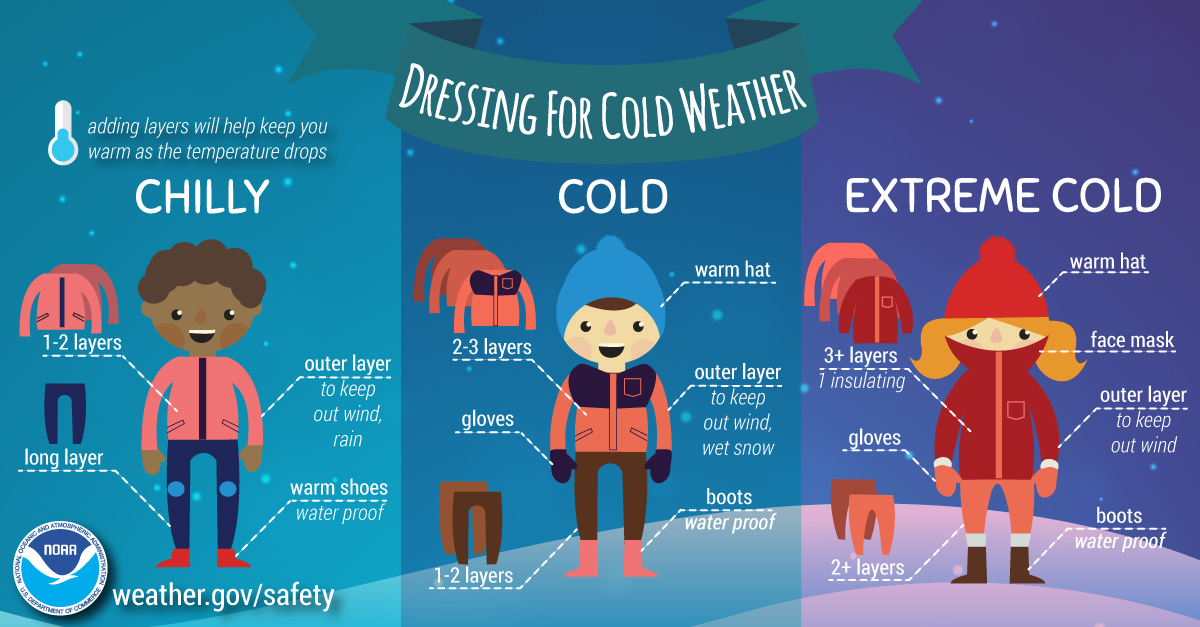
UIS cancels classes Tuesday night and Wednesday due to the extreme cold

Due to severe cold temperatures, UIS evening classes are canceled for Tuesday night, January 29 (evening classes are defined as any course that begins at 5:30 p.m. or after) and all classes are canceled for Wednesday, January 30. This is for both the Springfield and Peoria campuses. Online classes are not canceled. In addition, Liberal Leave Policy for employees is in effect for tonight and tomorrow. 

It is important to note that even when classes are canceled the campus does NOT fully close. If, for safety reasons, employees feel they need to leave early or are unable to commute to campus, they should use vacation/personal leave as applicable. Employees with questions regarding requesting absence time due to weather conditions should consult with their supervisors. 

If you must go outside, please dress appropriately and limit your time outdoors. The safety and well-being of our campus community is our highest priority. 

Weather-Related Hour Changes:

Brookens Library & ITS Help Desk: 
Closing at 6 p.m. Tuesday, open Wednesday 9 a.m. to 6 p.m.

Student Union:
Closing early at 11 p.m. Tuesday and Wednesday

TRAC - Campus Recreation 
Closing at 10 p.m. Tuesday, evening fitness classes canceled
Open Wednesday 10 a.m. to 10 p.m., all fitness classes canceled
Open Thursday at 8 a.m., morning fitness classes canceled

Note: The UIS Performing Arts Center’s Broadway performance of “Rent” is still scheduled in Sangamon Auditorium for Wednesday night, January 30 at 7:30 p.m. 

Below is a link to the Inclement Weather information on our website. https://www.uis.edu/emergencies/weather/

Friday, January 25, 2019

Four UIS projects part of a new, nearly $2 million U of I System arts and humanities initiative

Renovations to the University of Illinois Springfield Studio Theatre, the creation of a Hip-Hop Xpress mobile classroom, a cultural heritage tourism project and expanded arts and humanities-based exhibits and events are part of a new, nearly $2 million initiative announced by the University of Illinois System on January 25, 2018. The initiative is aimed at emphasizing the impact and influence of the arts and humanities across Illinois.

System-wide 14 projects were selected from more than 50 proposals in the first year of the Presidential Initiative to Celebrate the Impact of the Arts and the Humanities, launched last summer by President Tim Killeen to enhance and celebrate the arts and humanities at the system’s universities in Urbana-Champaign, Chicago and Springfield.

“The arts and the humanities are essential to providing a well-rounded education, crucial to fostering conscientious citizenship in communities, and foundational for the creative contributions that are needed within every economic sector,” Killeen said. “This initiative sends a message around the state and the country that the arts and humanities are a priority here.”

The original plan was to provide up to $1 million each year over the next two years to support faculty projects. But Killeen said so many strong proposals were received, including many multi-year and multi-university collaborative initiatives, that initial funding was increased to cover more projects over a two-year period. The program will be revisited in 2020.

The program is supported by the offices of both the President and the Executive Vice President, using funds devoted to faculty development.

Projects involving University of Illinois Springfield faculty or facilities include:

UIS Studio Theatre Renovations, $150,000 
Eric Thibodeaux-Thompson, Bryan Rives (Springfield) 
This project will support major structural improvements to the University of Illinois Springfield Studio Theater. Located in the Public Affairs Center Building on the UIS campus, the theater is a variable-use performance space able to seat about 200 people. Renovations and technology upgrades, including new seating, a new curtain system, lighting and sound, will provide a modern and professional performance venue for UIS Theatre and Music faculty and students. The intimate venue also will support smaller regional and national touring performances, opening the campus to wider community involvement.

The Hip-Hop Xpress, $150,000 
Adam Kruse, Malaika McKee, William Patterson, (Urbana Champaign), Tiffani Saunders (Springfield) 
The Hip-Hop Xpress is a project involving the creation of an internet-enabled school bus to be equipped as a multi-user music production and recording studio. Using music, dance, visual arts and technology, the bus will travel to communities and classrooms across the state, teaching youth about African-American history as well as cultural innovations spurred on by Hip-Hop. The mobile classroom will work with U of I Extension offices to reach youth organizations across Illinois. The project’s goals are to further integrate the arts into people’s lives and help develop Hip-Hop studies on all three campuses.

The Mythic Mississippi: I-Heritage as Public Engagement and Economic and Social Development, $180,000 
Helaine Silverman (Urbana-Champaign), Devin Hunter (Springfield) 
This public engagement project will help a selection of downstate Illinois communities to identify points of cultural heritage as a means of creating themed tourism routes along and near the Mississippi River. Faculty and students from the two campuses will conduct research collaboratively with local governmental, business and educational partners aimed at achieving sustainable strategies and effective policies that will foster local economic and social development. A website and high school-level teaching modules also will be produced. The project will culminate with a national symposium on the use of heritage tourism for community development.

The Humanities Innovating New Knowledge (THINK), $150,000 
Barbara Ransby and Jennifer Brier (Chicago), Kathryn Oberdeck (Urbana-Champaign), Devin Hunter (Springfield) 
THINK will bring together more than 30 faculty from across the U of I System’s three universities as well as community leaders to create an infrastructure for producing arts and humanities-based exhibits and events in Chicago, Urbana-Champaign, and Springfield. The project will include educational opportunities for students, pop-up installations that engage historical and contemporary issues in these respective communities, and scholar-practitioner working groups to address social problems, such as violence, wealth disparity, incarceration and human rights.

Friday, August 24, 2018

UIS welcomes 21 new faculty members for the start of Fall Semester 2018 classes

A total of 21 new faculty members have joined the University of Illinois Springfield for Fall Semester 2018. Nine faculty members will teach in the College of Liberal Arts and Sciences, two in the College of Business and Management, two in the College of Education and Human Services, four in the College of Public Affairs and Administration and one the Capital Scholars Honors Program. The College of Education and Human Services will also welcome a new research faculty member and two doctoral dissertation fellows will join the College of Public Affairs and Administration.

Amandailee Adams, assistant professor allied health/medical laboratory science in the College of Liberal Arts & Sciences, hold a master’s degree in biology from the University of Illinois Springfield. Her research interests include microbial biofilms and studying antibiotic resistant microorganisms in the clinical setting. Outside of work, she enjoys family adventures, traveling, boating and mentoring children.

Oluwakayode Adebowale, visiting research assistant professor of educational leadership in the College of Education and Human Services, earned a doctorate in technology, policy and innovation from the State University of New York – Stony Brook. His research interests include learner analytics; equity, diversity and inclusion; educational policy, learning technology, quantitative research, S.T.E.M and cross‐global collaboration. His personal interests include college‐prep, S.T.E.M, grant writing, track and field, mentoring, networking and traveling.

Timothy Bill, communication instructor and forensics coach in the College of Liberal Arts & Sciences, earned a master’s degree in communication from the University of Kentucky. His research and professional interests include political communication, speech and debate, persuasion, argumentation and instructional communication. Outside of work, he enjoys reading, hiking and running.

Glenn Cassidy, economics instructor in the College of Business and Management, earned a Ph.D. in public policy analysis from Carnegie Mellon University. His research interests include state and local public finance, economic development and regulatory economics. His personal interests include creative writing, poetry open mics and economic history.

Alan Freedman, assistant professor of allied health/athletic training in the College of Liberal Arts & Sciences, earned a master’s of education in athletic training from the University of Virginia. He is currently completing his doctorate. His research and professional interests include epidemiology of fencing injuries and hip joint pathology. Outside of work, he enjoys cycling, golf and travel.

Andrea Jensen, assistant professor of allied health/medical laboratory science in the College of Liberal Arts & Sciences, holds a master’s degree in public health from the University of Illinois Springfield. Her research/professional interests include asymmetric information in laboratory testing and its effect on healthcare costs, appropriate laboratory test utilization and outcome improvement in MLS programs. Her personal interests include gardening, theatre, knitting, crocheting, sewing, quilting and long walks.

Meghan Kessler, assistant professor of teacher education in the College of Education and Human Services, earned a doctorate in curriculum and instruction from the University of Illinois at Urbana-Champaign. Her research and professional interests include policies and practices of teacher evaluation and its impact on new teacher development and socialization. Outside of work, she enjoys running and biking the trails around Springfield.

Kenneth Kriz, distinguished professor of public administration in the College of Public Affairs & Administration, holds a doctorate in public affairs from Indiana University. His research and professional interests include municipal debt, public pension fund management, public financial risk management and economic development finance. Personally, he enjoys hiking, exercise, reading, music and Manchester City football.

Shelley Lewis, visiting instructor of English and modern languages, earned a master’s degree in English from Illinois State University. Her research and professional interests include student success in writing. Outside of work, she enjoys writing and reading.

Joshua Lively, doctoral dissertation fellow in environmental studies in the College of Public Affairs and Administration, earned a master’s degree in geology from the University of Utah. His research and professional interests include the evolutionary patterns of organisms (especially marine reptiles and freshwater turtles) during periods of globally warm climate in deep time. Personally, he enjoys hiking, bird watching, fishing, watching college football and tennis.

Elise LoBue, visiting instructor in the Capital Scholars Honors Program, earned a doctorate in women’s studies from the University of Iowa. Her research/professional interests include post‐socialist transitions in the former Soviet Union and Turkish refugees who are members of the Hizmet movement seeking political asylum in Canada. Personally, she enjoys gardening, fitness and wellness, Ubering her children (more of a hobby, than an interest) and watching their sporting activities.

Jennifer Martin, assistant professor of teacher education in the College of Education & Human Services, holds a doctorate in education from Oakland University. Her research and professional interests include culturally responsive teaching and leading practices and issues of educational equity. Outside of work, she enjoys writing, true crime podcasts and her twin Boston Terrier puppies, Mimi and Malcolm.

Sean McCandless, assistant professor of public administration in the College of Public Affairs and Administration, earned a doctorate in public affairs from the University of Colorado. His research interests include public administration and social equity. He is personally interested in music, travel and food (and when all three combine).

Noah Reynolds, assistant professor of biology in the College of Liberal Arts & Sciences, earned a doctorate in microbiology from The Ohio State University. His research/professional interests include molecular and cellular biology, specifically, understanding the regulation of protein synthesis in organisms ranging from bacteria to humans. Outside of work, he enjoys running, spending time with his kids and making and listening to music.

Roberto Rincon, doctoral dissertation fellow in political science in the College of Public Affairs and Administration, holds a master’s degree in political science from Northeastern Illinois University. His research and professional interests include issues of race and social justice with a focus on the politics of recognition as it regards Afro‐Mexican communities in Mexico and the United States. His personal interests include travel, music, fiction – an extension of a commitment to diversity, experiential learning and thinking the common.

Arnaldo Robles-Reyes, assistant professor of English and modern languages in the College of Liberal Arts & Sciences, earned a doctorate in second language acquisition (Spanish) from the State University of New York, University at Albany.

David Saner, instructor of accountancy in the College of Business and Management, earned a master’s degree in business administration (MBA) from Indiana University. His research and professional interests include fraud and unfunded pension liabilities. Outside of work, he enjoys golfing, skiing and attending a myriad of children’s events.

Junu Shrestha, assistant professor of public health in the College of Public Affairs and Administration, earned a doctorate in allied health, recreation and community services (environmental health education) from the University of Northern Iowa. Her research and professional interests include heavy metal pollution, water quality, GIS techniques in environmental and public health, and environmental pollutants and public health. Outside of work, she enjoys cooking, biking and traveling.

Steven Vitti, assistant professor of allied health/exercise science in the College of Liberal Arts & Sciences, holds a doctorate in exercise physiology from Springfield College. His research and professional interests include betalain supplementation, muscle damage and inflammation. Personally, he enjoys coffee and running.

Sarah Webb, assistant professor of English and modern languages in the College of Liberal Arts and Sciences, holds a doctorate in English from Louisiana State University. Her research and professional interests include creative writing, digital media and global advocacy and interventions in the issue of colorism. Outside of work, she enjoys earrings and 90s R&B.

Yun Zhao, assistant professor of environmental studies in the College of Public Affairs and Administration, earned a doctorate in geography from Oklahoma State University. His research and professional interests include Geographic Information System (GIS), remote sensing, urban and transportation geography and landscape ecology. His personal interests include bicycling, running, thriller movies and spending time with family.